CASE STUDY · OCTOBER 2026
Stackfarm
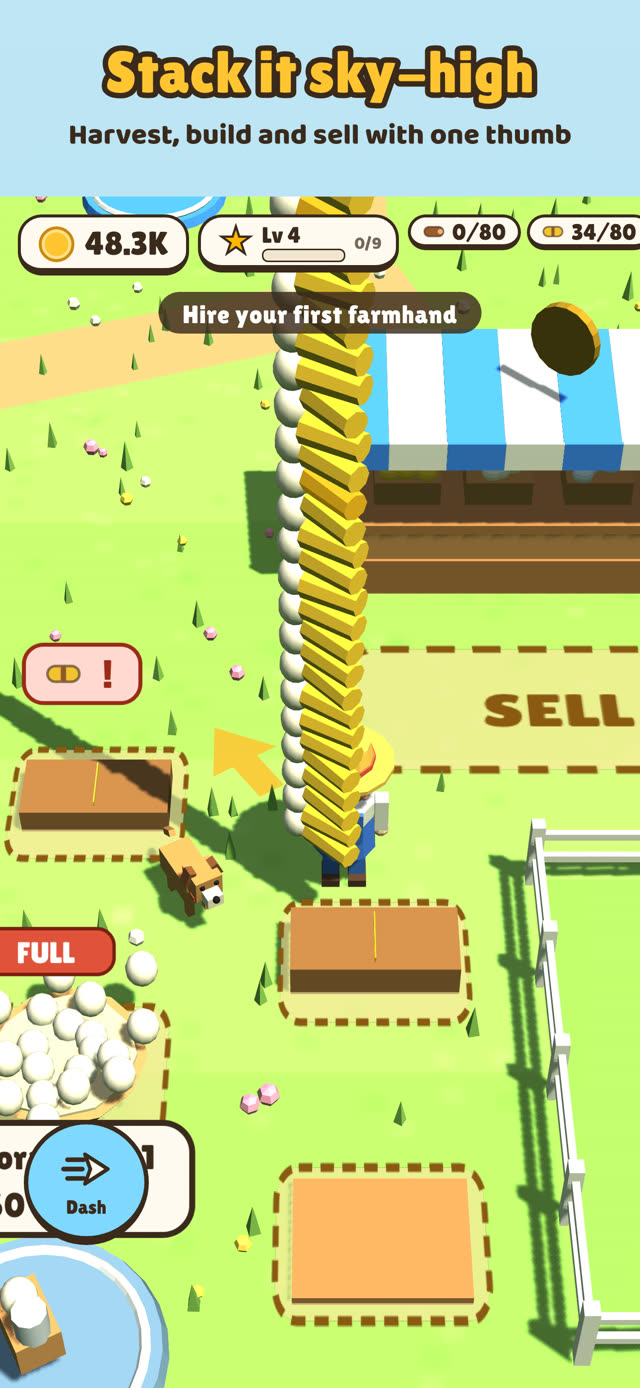
A cozy one-thumb farming game for iPhone: gather your harvest, stack it on your back, build, sell, and defend your farm at night.
In App Store review · on TestFlight
The game
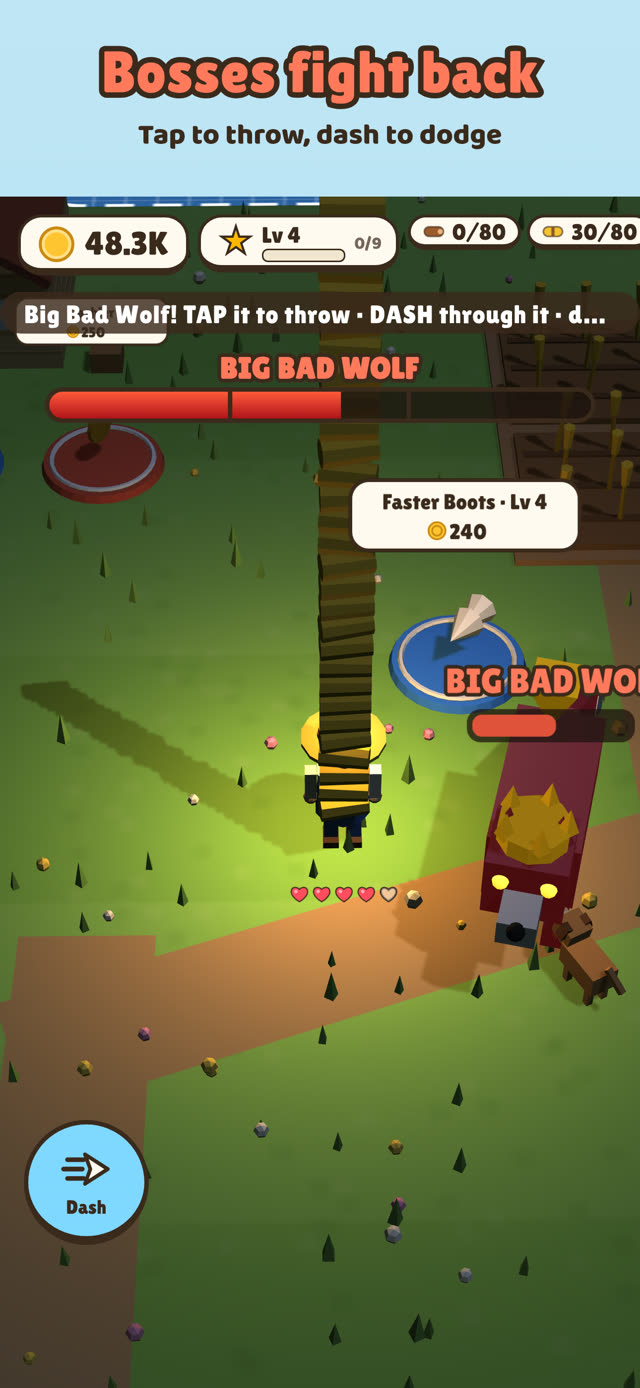
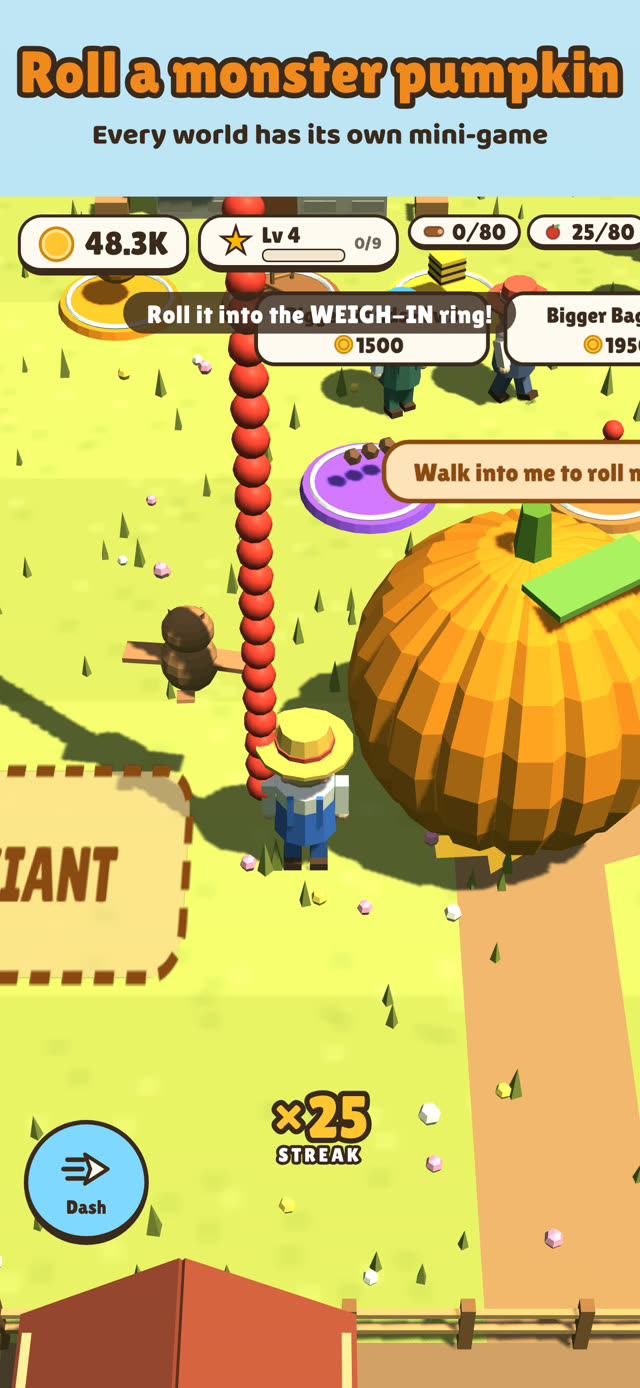
You walk your farmer around with one thumb, and everything you pick up stacks on your back. Sell it, build with it, or throw it at raiders who come at night. There are five worlds: Meadow Farm, Orchard Hills, Frosty Mine, Seaside Harbor and Sky Islands, each with its own layout, its own mini-game and its own goal that finishes the world.
Who built what
Stackfarm is a two-person project, built with AI coding agents doing much of the implementation. My co-developer built the rendering optimizations, the level editor and the marketing site. My part was the game itself: the tutorial, the economy and balancing, raids and boss fights, the redesign of four of the five worlds, the world goals, and getting it to run at 60 fps on an iPhone.
Balancing with a bot instead of a feeling
An idle game lives or dies by its pacing: too fast and there is nothing left to do, too slow and people quit. Instead of guessing, every balance change was checked with a pacing bot that plays a world from start to finish and reports the time it took, coins per minute and orders per minute. The rule for every redesign: stay within about 10% of the previous pace.
The Frosty Mine goal is a good example. The first version finished 15% too fast, so I made each depth cost 60% more. That run was too slow, with fewer coins per minute, so the final value landed at about 40%. Measure, adjust, measure again: the same loop as an eval, applied to game design.
60 fps on a phone
Three.js inside a phone app has a tight budget. To keep it smooth, I added adaptive graphics quality that lowers the resolution when the frame rate drops, a frame-rate display for testing, and static batching so unchanged objects are drawn together instead of one by one. One catch: in Low Power Mode, iOS caps the frame rate, and the adaptive logic read that as a slow phone and lowered quality for no reason. It now recognizes a capped frame rate and leaves the quality alone.
From browser to App Store
The game is a plain JavaScript web app built with Vite. Capacitor wraps it into a native iOS app and gives it access to haptics, local file saves, sharing and Game Center. Because the core is a web app, it also runs in a desktop browser during development.
What’s next
- Launch on the App Store once review is through.
- A playable web version on this site.
- Real play data to check the pacing bot against actual players.